
Pads and slabs
Concrete Flatwork in Willow Springs
Need something flat and solid to set things on? We form it, pour it and finish it ourselves.
What Are You Setting On It?
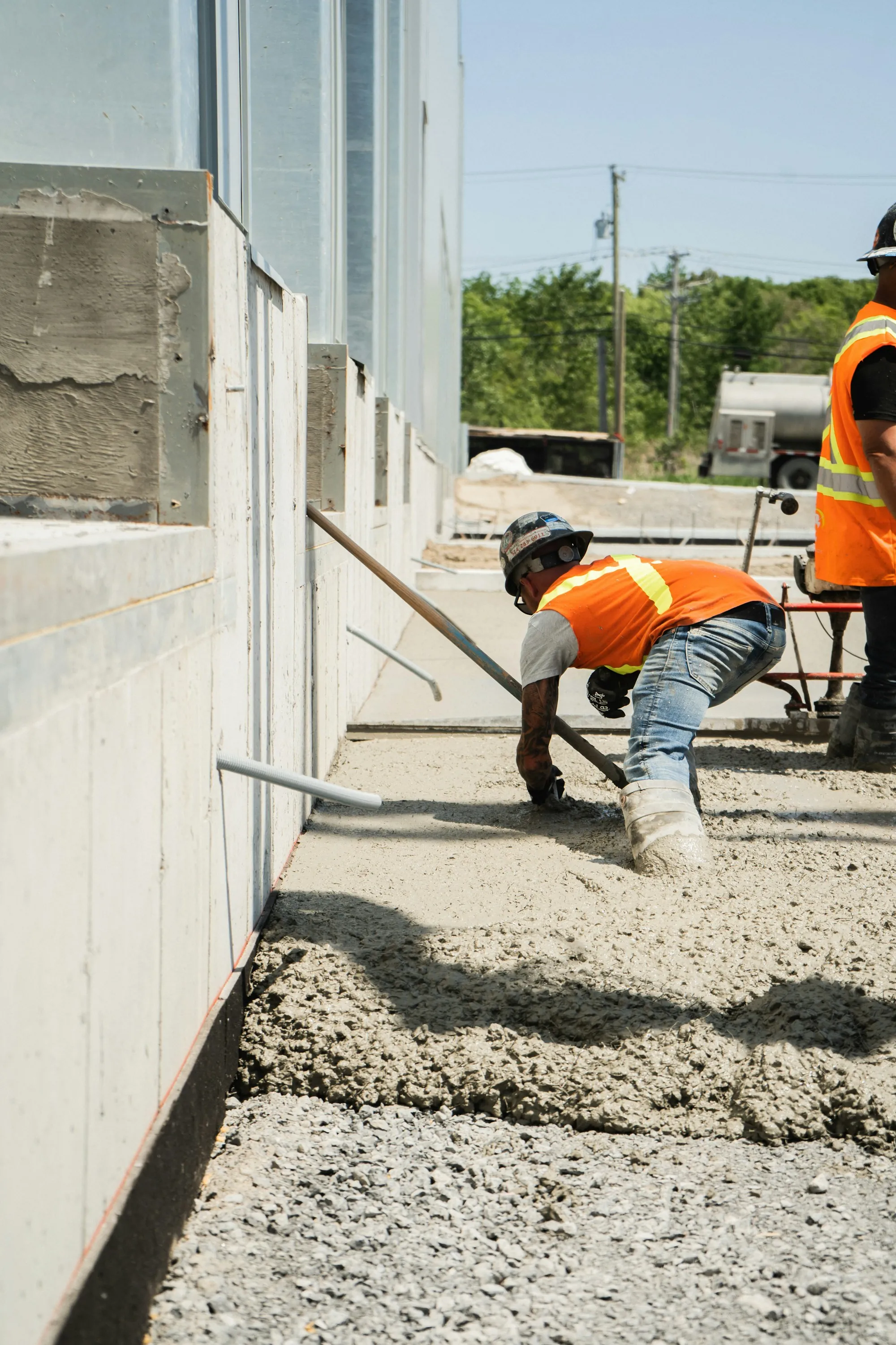
That is the first thing we ask, because it decides almost everything else. A garden shed is light. A hot tub full of water is not. A standby generator vibrates. A second parking pad for a boat trailer carries a concentrated load at the tongue jack and the tires. Each one needs a different thickness, a different amount of steel and sometimes a deeper base. Once we know the load, we work out the rest by hand on site. How flat is the ground? Which way does water want to go? Are there roots from those big oaks running through the spot? On wooded Willow Springs lots, the answer to that last one is usually yes, and we cut them out of the slab area so they do not lift it later. Then the routine: dig to firm soil, bring in crushed stone and compact it, set the forms with a slight fall so rain runs off, place the steel on supports, pour, finish and cut joints. The surface stays damp while it cures, and when the forms come off, we backfill the edges and clean up. You get a slab that sits level under whatever you put on it, on the date we said we would pour it.
What We Handle on a Flatwork Job
Every piece of the work, done by our own crew.
Load check
We ask what goes on the slab and size everything to that.
Root and soil removal
Roots and soft dirt dug out so nothing pushes or sinks the slab later.
Crushed stone base
Brought in and compacted until it is firm underfoot.
Forms with fall
Set with a slight slope so water runs off one edge.
Steel on supports
Reinforcement held up inside the slab, not lying on the stone.
Hand finishing
Broom finish outside, smoother trowel finish where it makes sense.
Joints cut on time
Cut while the concrete is young so any cracks follow the line.
Backfill and cleanup
Edges filled in and the work area left neat.
How Does a Slab Get Done?
Tell us the size and the load
What sits on it, and about how large? Most of the time a rough figure comes out of that first call.
We measure and set a date
One visit with a level and a shovel probe, followed by an itemized number and a pour day we keep.
Dig, pour, finish
Base and forms, the pour, finishing and joints. We come back to pull forms and clean up after it cures.
Why Let Us Pour It?
Sized for the load
Thickness and steel matched to what actually sits on the slab.
Roots dealt with
Wooded lots get the extra digging they need.
On the date we say
Small jobs get a firm pour date too.
- Load-matched thickness
- Roots cleared
- Steel held mid-slab
- Firm pour date
Need a Pad Poured This Season?
Tell us what is going on it and how big. We will talk thickness, price and when we can pour.